|
Dog Painting
|
| The art of Dog Painting become one of the most interesting subject in animal painting, the men's best friend becomes a family member to includes their portraits in our walls. The different kinds of breeds fascinate us with their lovable and funny looks. Painting a dog is easy, just to consider simple anatomy background, proportion, color and hair direction. The best way is to practice by observation, you will develop your insight to this friendly pets. From my experienced in dog shows, dog owners become my critic as they gave comments of depth in the character of their dogs. Oil paintings needs a several layers to achieve one piece, so I established a procedure to speed it up and painted them in an easy way. |
Dog
Painting Demo
Easy Oil Painting Techniques
|
1 |
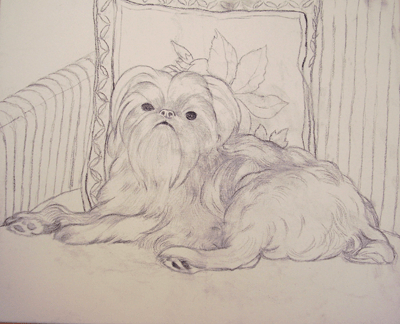 |
| Simply
use an ordinary HB graphite pencil, placing details in the
precise position. I did some grays to have some volumes.
I spayed a thin layer of fixative to protect the drawing
from smudging and not to be mix in the colors of the later
stage. |
2 |
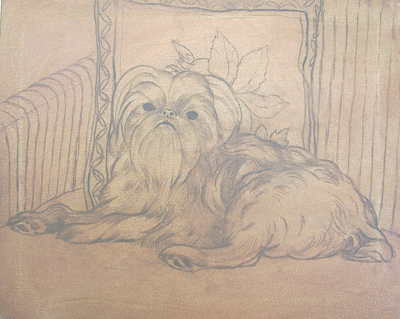 |
| The
color of the dog is series gradation of yellow ochre and
this color was applied to become the toned ground, I used
acrylic and applied with sponge and dilute with water and
so the pores of the canvas will closed, dry it with hair
dryer to speed it up the process. Apply for the second time
enough to see the sketched, if the sketched is opaquely
covered, wiped immediately with rugs. |
3 |
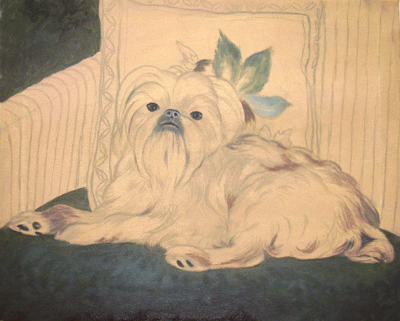 |
| At
this stage, oil painting begins. I start filling the darkest
tone and block all the possible heavy toned areas especially
in the corners. |
4 |
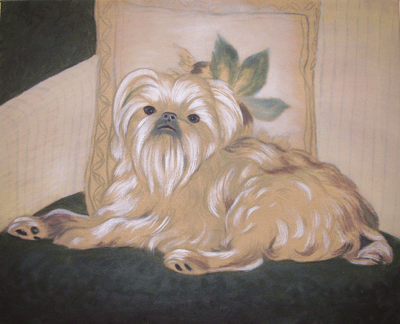 |
| After
the darkest area, now I immediately rendered the highlight
and intensity of lighted area. |
5 |
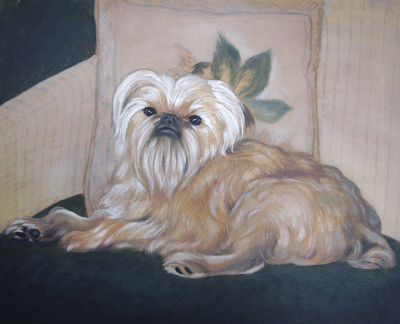 |
| At
this stage, I start playing with shades and shadows, add
different tone density and the local color of the main subject,
foreground descending to background. I filled all the areas
and let dry to prepare for the next session. I used paint
thinner as a solvent and quickly dries the applied oil paints. |
6 |
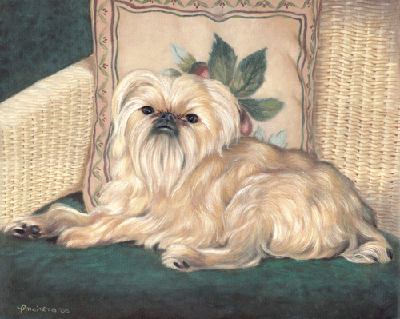 |
Final
Stage
Last stage, this time I start to the
background completing the details, shadows and cast shadows
and continue detailing towards the foreground. Sometimes
I used the lost and found method, completing the details
in the lighted part and lost the details in the shadowed
areas, 'will look more mysterious. The more you glazed and
overpainting on top of each color, the more the definition
of each details. My last glazed of color is a series of
toned browns, thinned with more linseed oil (or with Japan
dryer - a day or two, the paint dries quickly), to each
local color, this method will completely harmonized each
color (including the darkest paint), it will solidify the
looks of the whole painting. I wait until it fully dries
and applied gloss varnish, the colors will look more defined
and vivid, don't forget to sign your painting. |
|
|
