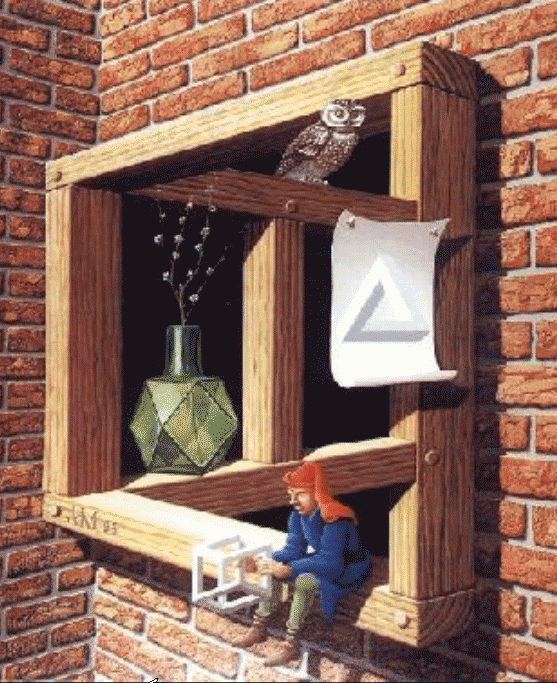
Trompe-l'œil is French expression literally meaning "to fool the eye", a style of painting technique whereby forms painted on flat planes which gives the appearance of three-dimensional, or photorealism and exist in deep space. It is also called as illusionism, the history of trompe-l'œil dates back to the 4th century BC in Greece; the grapes in Zeuxis's paintings were said to seem so real that birds would peck at them. The Renaissance development of linear perspective greatly advanced trompe-l'œil technique. During the baroque period, trompe-l'œil reach its apex in the enormous ceiling and mural paintings of various Roman churches and palaces. The vogue spread north in the succeeding rococo period and achieved fullest flower in Austria and Bavaria. The 19th-century American still life painter William Harnett was a master of representational illusionism, a contemporary version of which is seen in photorealism. The term trompe-l'œil and illusionism also refers to the creation of spatial illusions in architecture. |